CLAIM: You can get free solar panels installed on your roof!
FACT: Some companies offer solar panel installation for no money down, but it’s not 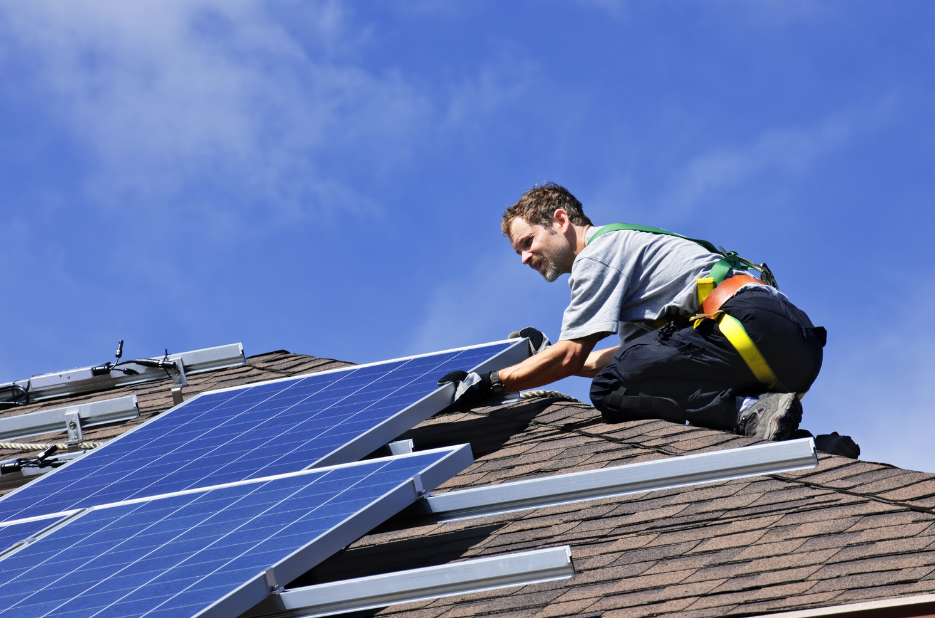 free—customers will be renting the panels monthly for the term of the lease (usually 15+ years).
CUB RECOMMENDS: Explore your options. While leasing may make sense for some homeowners, buying your solar system outright could end up being more cost-effective.
Consumers tell CUB that sales people have knocked on their door and pitched solar panels for “free” or with “no money down.” Sounds great, but be wary: Solar panels typically aren’t free. Let’s break down the different solar offers available to consumers in Illinois.
(Special note: There is a legitimate state-sponsored solar incentive program offered in Illinois that covers most (or sometimes all) of the cost of going solar, but those are for income-qualified customers only and are not what this blog is about. Read more about this income-qualified program, Illinois Solar For All.)
Leases: With a solar lease, the company owns the system and you pay them monthly for the panels. While such an arrangement has been marketed as “no money down” or “free solar panels,” that’s misleading. Although it’s true customers may not pay anything for the panels to be installed, they will pay the company a fixed amount each month for 15-25 years, based on the terms of the lease. Also, leases usually include a provision allowing companies to raise the price each year by 2.9 percent.
Power Purchase Agreement (PPA): A PPA is similar to a lease in that the company owns the system and is allowed to annually increase the price the customer pays. However, instead of paying a fixed amount each month, the customer is charged a predetermined amount per kilowatt-hour (kWh), based on the energy produced by the system each month.
Ownership: You buy the panels outright, and you are responsible for their ongoing maintenance.
Things to consider:
- With both a lease and a PPA, because the solar company owns the panels, it benefits from the incentives that otherwise would go to the customer: a federal tax credit (covers 30 percent of project costs), Solar Renewable Energy Credits (represents the environmental benefit of 1,000 kWh of renewable energy generation, through Illinois Shines, the state’s solar incentives program), and typically any utility rebates. Because of these incentives, a company could give you a better rate for the lease or the PPA, but keep in mind that the company is under NO obligation to pass down a certain amount of savings to you.
- With solar ownership, you do benefit from the incentives, but it also requires a high upfront investment for long term savings in addition to ongoing maintenance costs.
- Due to the federal budget reconciliation bill passed in the summer of 2025, the 30 percent federal tax credit will be eliminated after Dec. 31, 2025 for residential solar customers who buy their panels outright. However, third-party vendors, who offer customers leases or PPAs, will still have access to the 30 percent tax credit until 2027. But the guidance is complicated:
- Projects that “commence construction” after December 31, 2025 must comply with eligibility rules related to “foreign entities of concern” (such as China) and payments to such entities. (For more info about “foreign entities of concern,” here’s a good resource by The Tax Law Center: Navigating OBBBA: phaseouts, prohibited foreign entity rules, and other new rules.)
- Projects that “commence construction” before July 4, 2026 will have four years to be placed in service, in order to qualify for the credit. Projects that “commence construction” after that date must be placed in service before the end of 2027 to qualify for the credit.
- The Department of Treasury has released updated guidance on what “commence construction” means for the purpose of qualifying for the clean energy tax credit. (Here’s Utility Dive reporting about it, and here’s the actual guidance.)
CUB guidance:
- Before you sign a solar lease or PPA, find out how much it would cost to buy your system outright, and, if necessary, finance it. Many of the leasing companies themselves provide this option, but CUB recommends getting quotes from at least three different installers. If you would like to learn more about ways to finance your solar project please see Illinois Power Agencies solar financing fact sheet.
- If you’re considering a lease or PPA, make sure to read through the agreement carefully to clearly understand what you’re signing up for. Also, check with the solar company about the tax credit–whether the project would qualify for one given the new restrictions outlined above, and, if so, whether the company will share the benefit with you.
- If you plan to own the solar panels, then check with the installer to see if you can get the work done before the solar tax credit is eliminated at the end of the year for people, like you, who own their panels.
- You should be sure to inquire about the price escalators of a lease or a PPA before signing the agreement to ensure you are set to see savings with the price escalator included. In the long run, savings can be lower than owning your system. Unfortunately, the payback period for your system will be increasing due to the sunset of the tax credit.