 There’s been a lot of buzz about the impact of data centers on electricity demand–CUB Illinois Executive Director Sarah Moskowitz recently spoke at length about it on a Chicago radio station. This Q&A attempts to get through the hype and give Illinois consumers some facts.
What are data centers?
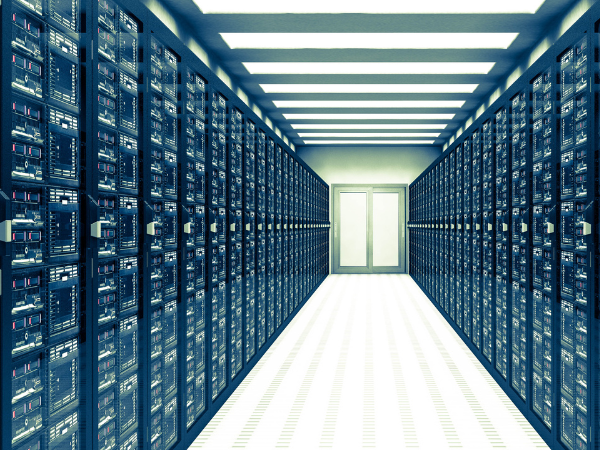
A data center is a facility that houses computer systems used for storing, processing and distributing data. A growing number of these facilities are used to power artificial intelligence. A report by Illinois PIRG, Environment Illinois Research & Education Center and Frontier Group shows that the number of data centers in the United States about doubled between 2021-2024, and Chicago is one of the nation’s biggest data center markets. Released in January, the report said at the time that data centers drew 5.43 percent of all the electricity consumed in the state. That was expected to grow–the Chicago Sun-Times reported last December that 30 more data centers were planned in the state. But as CUB pointed out in that article, such centers don’t always get built–and it’s a big problem if such “phantom data centers” needlessly add to our costs. (But more on that later.)
How much energy do they use?
A lot! Our friends at the Citizens Utility Board of Minnesota reported that a single Amazon data center being built in that state will require 600 MW of power– roughly equivalent to the power demand of an entire city.
The PIRG/Environment Illinois/Frontier Group report found that while everyone projects a significant increase in power demand from these centers, the estimates vary and are “highly uncertain.” It pointed to the Electric Power Research Institute, which estimated that data center electricity demand could grow anywhere from 29 percent to 166 percent (from 2023) levels by 2030.
Are data centers impacting our electric bills in Illinois?
Yes–painfully so. On June 1, ComEd and Ameren customers were hit with price spikes, due to a surge in power demand and poor policy from power grid operators that have failed to adapt to the changing energy market, including this new challenge of data centers. Those spikes have cost customers hundreds of dollars in higher power bills this summer–with some consumers complaining of triple-digit increases.
The direct reason for these bill increases is a surge in the cost for reserve electricity, also called “capacity.” Capacity prices are set by auctions run by the grid operators, PJM Interconnection for ComEd customers and the Midcontinent Independent System Operator (MISO) for Ameren customers.
The Associated Press reported that the Independent Market Monitor for PJM showed that 70 percent — or $9.3 billion — of this year’s increase in electricity cost was the result of data center demand.
PJM has already run its 2026/27 auction, where the capacity price surged to yet another record, beating the previous year. As Clara Summers, manager of CUB’s Consumers for a Better Grid Campaign, has already reported, the biggest contributor to this most recent auction spike was “large loads,” meaning big customers that use a lot of energy, such as data centers.
The issue is so pronounced that in August, PJM’s Market Monitor recommended that large data centers be required to bring their own generation.
How much does data center “hype” contribute to higher prices?
When grid operators decide how much capacity we need to buy in the auctions, they are predicting how much electricity we will need in the future. The grid operator uses “load forecasts” to project future electricity demand. Because consumers are on the hook for paying for this future demand, it’s important to get the load forecast right.
But utilities use wildly different approaches to estimate how much capacity they need. Too often a proposed data center is included in a utility’s load forecast even if it has little chance of actually being built. This drives up prices. One expert estimated that across the nation the number of requests for potential data centers to connect to the grid was 5 to 10 times more than the number of actual data centers.
PJM, the grid operator for ComEd, recently acknowledged the major challenge data centers are posing to grid reliability and is beginning an accelerated stakeholder process to find solutions.
What are the environmental impacts of data centers?
There are environmental worries in addition to the financial ones. For one, this surge in energy demand could keep outdated, expensive fossil fuel power plants open past their close date. (We’ve seen the federal government start to make moves to keep such plants open, at extra cost to consumers.) There are other environmental concerns: Data centers gulp as much as 5 million gallons of water a day. In Dekalb, the Meta data center is using up so much water that it’s estimated they’ll be in a water deficit by 2030. High water usage also is a concern connected to the Quantum computing center proposed for South Shore Chicago on Lake Michigan.
So what can be done about this?
For one, bringing more electricity to the grid would be extremely helpful, and that’s why CUB has been advocating for reforms at both PJM and MISO. The grid operators have made new sources of energy–mainly low-cost wind, solar and battery technology–wait far too long (years!) to come online. And in Illinois in 2025, we worked to pass the Clean and Reliable Grid Affordability (CRGA) Act, which, among a long list of reforms, expands energy efficiency programs and makes it easier to add more battery storage to the grid to deal with the supply-demand imbalance caused by data centers.
There’s a lot more to do, both in Illinois and at the power grid operators. As we’ve said before, here’s CUB’s wish list.
- Grid operators need to improve their load forecasting so only the big data centers that we are confident will materialize are reflected. Consumers should not be paying extra in capacity prices for “phantom data centers” that developers might build but don’t.
- Also, grid operators should explore creating a separate interconnection queue for large loads. This would ensure that the grid is ready for them to connect and that there is enough generation to go around before they do so. This approach also would give data centers clear feedback: If the available grid capacity isn’t enough for you, figure out how to be more efficient. For example, data centers can act as flexible load, reducing operations or using on-site backup battery systems when electricity is in high demand to spare the grid.
- There is also a clear role for states in helping large loads to be good grid citizens. One is that states can require data centers to operate with a certain level of energy efficiency or load flexibility.
- States should also create separate rate classes, minimum bills, and other contract terms for data centers that ensure the costs of local utility infrastructure upgrades to serve these centers don’t fall unfairly on everyone else. (The Public Utilities Commission of Ohio recently made headlines for enacting several such policies for data centers. See coverage here and here.)
- Finally, and this is a big one: Data centers should be required to bring their own new generation with them–pay for it and make it clean. (Cleverly, this has been called BYONCE–pronounced like the Grammy-winning superstar, but standing for: “Bring Your Own New Clean Energy.”) The AP reported that Monitoring Analytics has proposed requiring data centers to procure their own power–to avoid a “massive wealth transfer” from everyday electric customers to tech companies.
It’s going to take some political will to, as The AP said, “take a hard line against tech behemoths like Microsoft, Google, Amazon and Meta.” We’ll keep working for reforms to protect customers from data center energy costs.